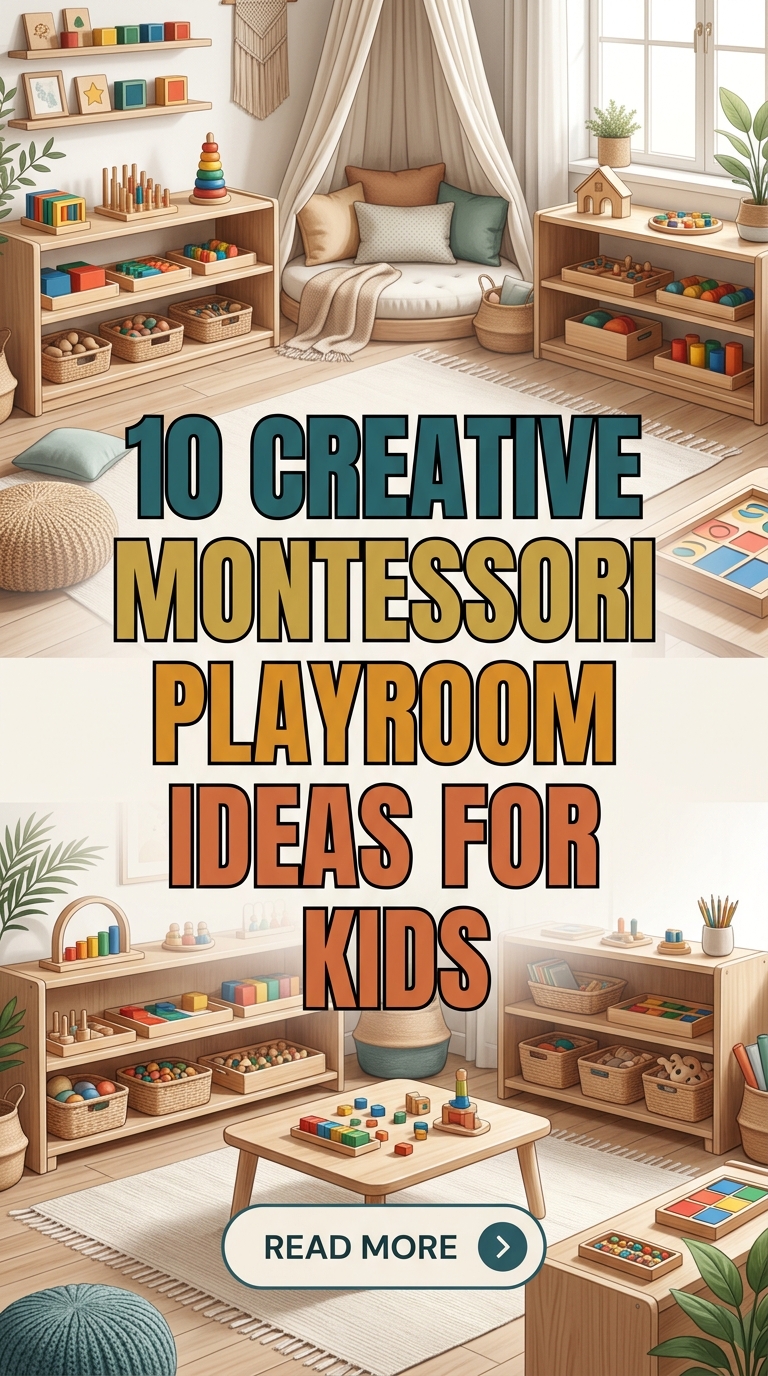

Creating a dedicated playroom for children is one of the best ways to encourage learning, creativity, and independence. A well-designed Montessori-inspired playroom provides a safe, organized, and engaging environment where children can explore, play, and develop essential life skills. Unlike traditional playrooms filled with clutter, Montessori spaces focus on simplicity, accessibility, and purposeful activities.

In this guide, we’ll explore 10 creative Montessori playroom ideas for kids that can transform any room into an educational and inspiring space. Whether you’re designing a playroom from scratch or updating an existing area, these ideas will help create a child-friendly environment that promotes growth and imagination.
Why Choose a Montessori Playroom?
A Montessori playroom is designed around the child’s needs. Everything is placed at their height, making it easier for children to access toys, books, and learning materials independently.
Benefits of a Montessori Playroom:
- Encourages independence
- Improves organization skills
- Supports cognitive development
- Promotes creativity and problem-solving
- Creates a calm and inviting atmosphere
- Reduces toy clutter and overstimulation
1. Install a Large Learning Wall
A learning wall serves as the centerpiece of a Montessori playroom. It can include magnetic boards, educational puzzles, number games, alphabet letters, and creative art displays.
Why It Works:
Children can interact with educational materials while improving problem-solving and fine motor skills.
Pro Tip:
Use colorful magnetic blocks and alphabet pieces to make learning fun and engaging.

2. Create an Accessible Art Station
A dedicated art corner encourages creativity and self-expression.
What to Include:
- Crayons
- Colored pencils
- Markers
- Drawing paper
- Paint supplies
Store materials in small containers that children can easily reach without assistance.
Benefits:
Kids become more confident in exploring their artistic talents independently.

3. Add Floating Bookshelves
Books play a crucial role in early childhood education.
Montessori Tip:
Display books with covers facing outward rather than showing only the spines. This makes books more visually appealing and easier for children to choose.
Benefits:
- Encourages reading habits
- Develops language skills
- Promotes independent learning

4. Use Natural Wood Furniture
Montessori environments often feature natural materials instead of bright plastic furniture.
Recommended Items:
- Wooden shelves
- Wooden toy storage
- Wooden learning blocks
- Child-sized tables and chairs
Natural textures create a calm, warm, and inviting atmosphere.

5. Incorporate Educational Wall Decor
Decorative elements can also serve educational purposes.
Examples:
- Alphabet posters
- Number charts
- Nature illustrations
- Inspirational learning quotes
Wall decor can reinforce concepts children are learning every day.

6. Add Comfortable Reading Nooks
Every Montessori playroom should include a quiet reading area.
Essentials:
- Soft chair
- Cozy cushions
- Small bookshelf
- Soft rug
A comfortable reading corner helps children relax and develop a love for books.

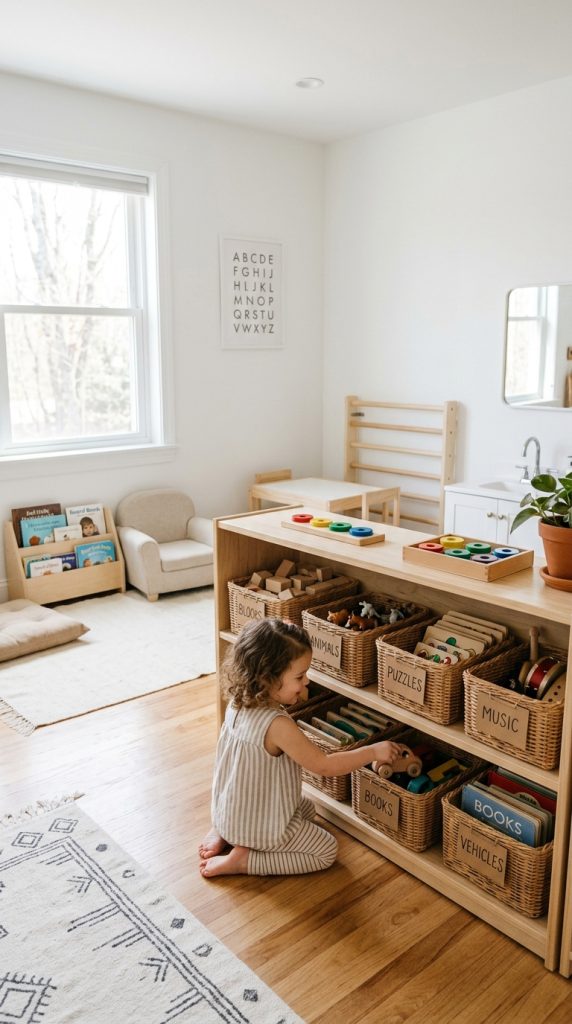
7. Organize Toys in Open Storage Baskets
Open storage is one of the key principles of Montessori design.
Best Storage Solutions:
- Wicker baskets
- Wooden trays
- Open shelves
When toys are visible and accessible, children learn responsibility by selecting and returning items independently.
Benefits:
- Reduces clutter
- Encourages organization
- Supports decision-making skills
8. Include Building and STEM Activities
Construction toys help develop critical thinking and creativity.
Popular Options:
- Magnetic tiles
- Wooden blocks
- Shape puzzles
- STEM kits
Building activities improve spatial awareness and problem-solving abilities.
Montessori Advantage:
Children learn through hands-on exploration and experimentation.

9. Choose Soft Neutral Colors
A Montessori-inspired playroom typically features calming neutral tones.
Recommended Colors:
- Beige
- Cream
- Light gray
- Soft white
- Natural wood finishes
Neutral colors reduce distractions and create a peaceful environment that supports concentration.

10. Add Movement and Balance Equipment
Physical development is just as important as academic learning.
Great Additions:
- Balance boards
- Soft climbing blocks
- Stepping stones
- Mini obstacle courses
Movement activities improve coordination, balance, and confidence while keeping children active.

Essential Montessori Playroom Design Tips
To maximize the effectiveness of your playroom, keep these principles in mind:
Keep It Organized
Avoid overcrowding the room with too many toys.
Rotate Toys Regularly
Introduce different toys every few weeks to maintain interest.
Prioritize Child Accessibility
Place shelves, books, and materials at child height.
Focus on Quality Over Quantity
Choose meaningful toys that encourage creativity and learning.
Encourage Independence
Design the space so children can manage activities on their own.
Conclusion
A Montessori playroom is more than just a space for play—it’s an environment designed to support learning, independence, and creativity. By incorporating learning walls, reading corners, art stations, natural materials, and educational activities, parents can create a room that inspires exploration and development every day.
These 10 Montessori playroom ideas for kids provide practical and beautiful solutions for designing a functional learning space that children will enjoy for years to come. With thoughtful organization and child-centered design, any room can become a nurturing environment where kids learn through play.