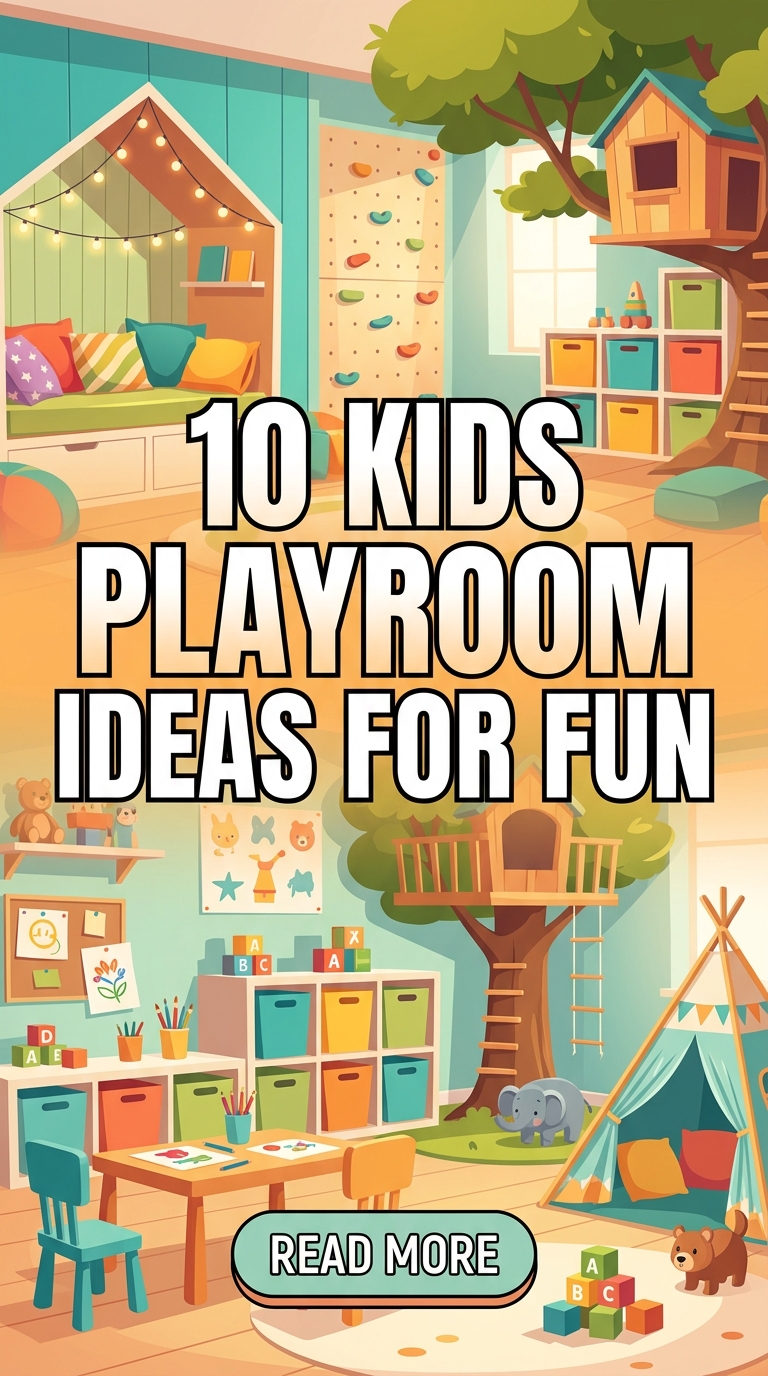

A well-designed playroom can inspire creativity, encourage learning, and help keep your home organized. Whether you have a dedicated playroom or a small corner for your children, creating a space that is both functional and fun can make a huge difference in their daily development.

Modern parents are increasingly looking for playroom ideas that combine style, organization, and educational value. From Montessori-inspired setups to interactive learning walls, there are countless ways to design a space where children can play, learn, and grow.
In this guide, we’ll explore 10 creative kids playroom ideas that will transform any room into an engaging environment while keeping clutter under control.
1. Create a Montessori-Inspired Learning Wall
A Montessori-style learning wall encourages independent learning and exploration. Install a magnetic board, whiteboard, or activity panel where children can practice letters, numbers, shapes, and drawing.
This setup allows kids to engage with educational materials at their own pace while developing problem-solving skills.
Benefits
- Encourages independent learning
- Supports creativity
- Easy to customize as children grow

2. Use Open Shelving for Easy Access
Open shelves make toys, books, and learning materials easily accessible to children. Instead of storing everything in closed cabinets, display items neatly on shelves.
Children are more likely to play with and return toys when they can clearly see them.
Why It Works
- Promotes organization
- Makes cleanup easier
- Encourages independence

3. Design a Cozy Reading Corner
A reading nook can become a child’s favorite place in the room. Add a comfortable chair, bean bag, or floor cushions along with a small bookshelf.
Reading corners help children develop a love for books while providing a calm area for quiet activities.
Essentials
- Comfortable seating
- Good lighting
- Age-appropriate books

4. Add Educational Wall Art
Decorative wall art can be both beautiful and educational. Consider alphabet prints, motivational quotes, world maps, numbers, colors, or nature-themed artwork.
Educational wall decor helps reinforce learning through everyday exposure.
Best Options
- Alphabet posters
- Number charts
- Animal illustrations
- Inspirational messages

5. Create a Dedicated Art Station
Children love drawing, painting, and crafting. A dedicated art station gives them a space to express their creativity without making a mess throughout the house.
Include paper rolls, crayons, markers, paint supplies, and storage containers.
Benefits
- Encourages creativity
- Supports fine motor development
- Keeps art supplies organized

6. Incorporate Natural Materials
Natural wood furniture, woven baskets, cotton rugs, and neutral colors create a calming environment. Montessori-inspired spaces often use natural materials to promote focus and sensory development.
Natural textures also add warmth and timeless style to the playroom.
Popular Materials
- Wooden toys
- Rattan baskets
- Cotton rugs
- Wooden shelves

7. Use Storage Bins and Baskets
Storage is essential for maintaining an organized playroom. Label bins and baskets according to toy categories such as blocks, puzzles, dolls, art supplies, and books.
This simple system helps children learn responsibility and organizational skills.
Storage Ideas
- Wicker baskets
- Fabric bins
- Toy cubbies
- Rolling storage carts

8. Include Building and STEM Activity Zones
A dedicated building area encourages critical thinking and problem-solving. Stock this section with blocks, magnetic tiles, construction sets, and STEM toys.
Children can experiment, create structures, and develop engineering skills through play.
Learning Benefits
- Improves spatial awareness
- Enhances creativity
- Supports STEM education

9. Create a Soft Play Area
A soft play section provides a safe space for younger children to climb, crawl, and explore. Foam blocks, soft mats, and cushioned play equipment can help improve physical development.
This area is especially useful for toddlers and preschool-aged children.
Features to Include
- Foam climbers
- Soft mats
- Cushioned seating
- Activity cubes

10. Design a Multi-Functional Playroom
The best playrooms serve multiple purposes. Combine reading, learning, creativity, storage, and physical activity into one cohesive space.
A flexible layout allows the room to adapt as your child grows and develops new interests.
Advantages
- Maximizes available space
- Supports different activities
- Grows with your child

Tips for Designing the Perfect Playroom
Prioritize Safety
Secure furniture to walls, use rounded edges where possible, and choose child-safe materials.
Keep It Organized
Rotate toys regularly to reduce clutter and maintain children’s interest.
Choose Durable Materials
Kids’ spaces experience heavy use, so select furniture and decor that can withstand daily activity.
Use Neutral Base Colors
Neutral walls and furniture create a calming foundation while colorful toys provide visual interest.
Encourage Independence
Arrange shelves, books, and materials at child-friendly heights so children can access them independently.
Conclusion
Creating the perfect playroom doesn’t require a huge budget or a large space. By incorporating smart storage, educational elements, creative activity stations, and comfortable seating, you can design an environment that encourages learning and fun.
These 10 kids playroom ideas offer a balance of organization, creativity, and functionality. Whether you’re inspired by Montessori principles, educational learning walls, or cozy reading corners, these ideas can help transform any room into a beautiful and engaging space for children.
A thoughtfully designed playroom supports development, inspires imagination, and creates lasting memories for both children and parents.